


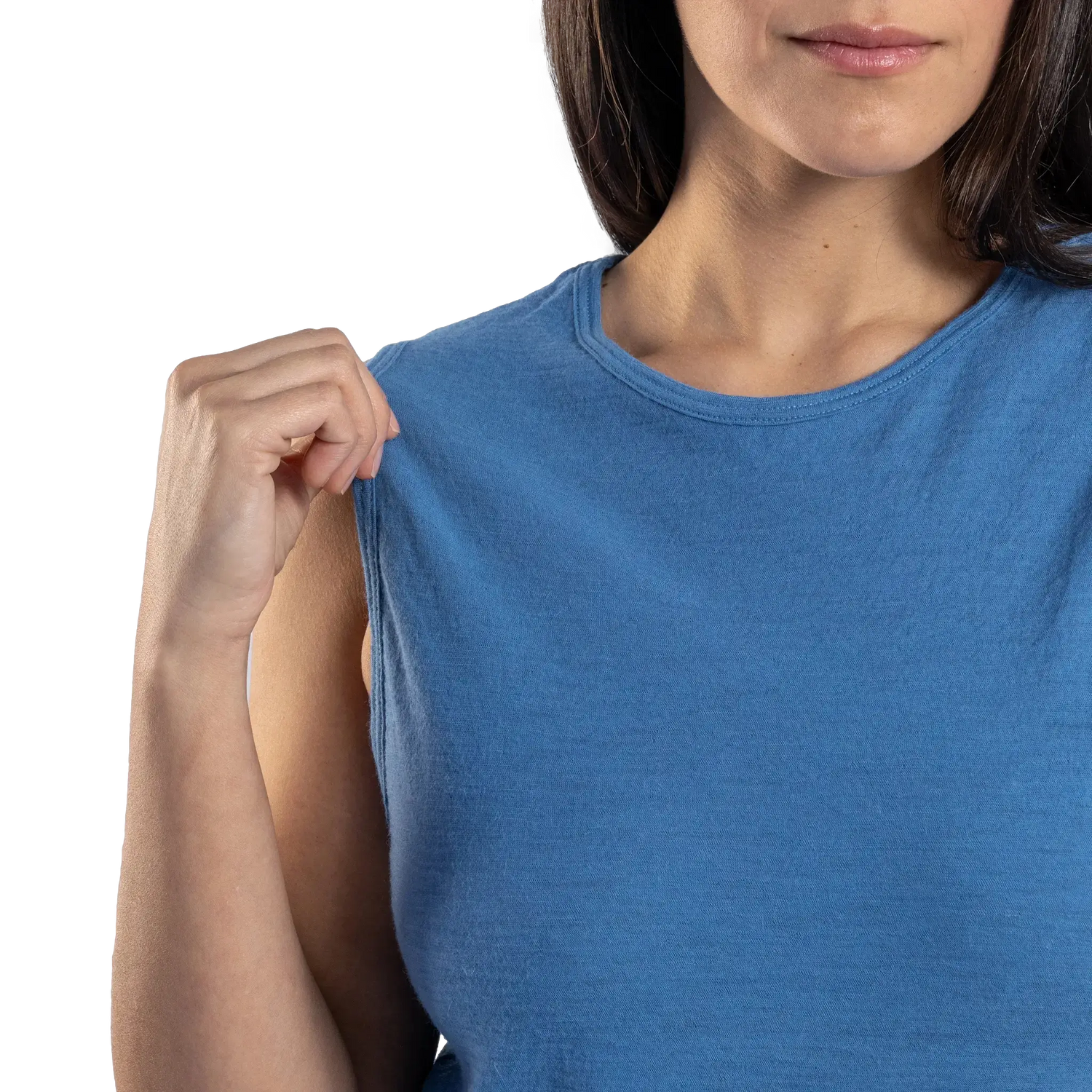
Women's Alpaca Wool Crop Tank Top
160 Ultralight
Ultra-soft and ultralight, this 100% Alpaca Wool Tank Top is designed for comfort during your most active days. Whether you're hitting the trails, traveling, or enjoying a day of light...
Learn MoreFree Shipping on orders over 200 €
Alpaca vs Merino
Alpaca Wool outperforms Merino.
Alpaca fibers evolved in the harsh Peruvian Andes over millennia, to keep you protected on any adventure.
Unique Semi-Hollow Fibers:
• Lighter Weight
• Higher Insulation
Smoothest Fiber Scales:
• Moisture Wicking
• Softer without Felting
High-Performance Fiber
Pack lighter, travel farther.
Get the most out of nature with the ultimate performance fiber. Explore the outdoors clean and dry, with naturally anti-bacterial and temperature regulating Alpaca Wool.
❊ Anti-bacterial & Odor-resistant
↻ High sweat-wicking
☁ High breathability
☀ UV - Protection
✓ Light & durable
Natural Fiber Materials
The fabric, threads and labels of this garment are made from natural fibers:
• 100% Alpaca Wool Fabric
• 100% Cotton Threads
• 100% Cotton Labels
Where present, elastic bands are made of natural tree rubber and cotton, and zips are metal on cotton tape.
Shipping & Returns
Worldwide Shipping and Free EU & UK Shipping* (conditions apply).
Legal guarantee — Every product has the minimum two-year EU legal guarantee of conformity.
 Open the full notice
Product safety and contact
Manufacturer: Waska S.A.C., Calle 7, Mz. E, Lote 9, Urb. Las Vertientes de La Tablada, Villa El Salvador, Lima 15837, Peru · logwaska@gmail.com
Responsible person in the EU: Arms of Andes (eenmanszaak), De Nieuwe Erven 3, Unit 14003, 5431 NV Cuijk, Netherlands · aoa@armsofandes.com
LESS WEIGHT, LESS WASHING
The Best Tank Top for Active Days
Fabric Specs
- PFAS-free
- Tank Top Weight: 85 g (Size S)
- Designed for hiking, trail running, climbing, traveling, and backpacking in all seasons
- Fitted cut with a natural stretch
Product page - Fabric Care
Fabric Care
Naturally Dyed Clothes
Although natural dyes are environmentally friendly, protective to skin and give pleasing colors, they do not bond with textile fiber materials like synthetic dyes. This may lead to slight color changes when sweating or rubbing and the colors may bleed a little.
We recommend using naturally colored clothing with other dark clothing or equipment like backpacks. We also recommend washing your clothing as little as possible, to ensure that the unique color lasts as long as possible.
If you do find your alpaca clothing needs a wash:
- Hand wash or machine wash on a gentle cycle in cold water with a gentle/wool detergent.
- Wash with like colors. The dye will likely tint the washing water, but the color of your garment won’t be changed.
- If hand-washing, rinse the garment(s) in cold water and gently squeeze out the excess water.
- Lay the garment flat to dry.
- Iron on warm setting, if you feel ironing is necessary.
- Store your garments, preferably folded rather than hung.
A few things to avoid:
- Do not use fabric softener or bleach.
- Be cautious when using citric acid, as it may naturally bleach botanically dyed fabrics.
- Do not tumble dry or dry clean.
- Try not to twist or wring the fabric too much.

ALPACA WOOL: FIBER OF THE GODS
The Superior Fiber for the Outdoors
Alpaca wool is a superior choice for the outdoors and outperforms any other fiber: merino wool, cotton, rayon and polyester.


SINGLE ORIGIN SUPPLY CHAIN
Where Was This Tank Top Made?
We use natural local resources and a short transparent supply chain. Our mission is to teach you as much as possible about how clothes should be made.
Designed & Made in One Country: Peru
Contrary to industry norms, every step involved in making our clothes is done in only one country: Peru, the home of our family. Our production in Peru includes fiber sourcing, yarn spinning, fabric knitting, dyeing, finishing, and garment sewing.
From Peru, our clothes go straight to California or Europe on its journey to you.
Made in One Country
Every step, from fiber to finished garment, happens in Peru. Keeping production in one country shortens our supply chain: materials are not shipped between countries for each production step.
Transparency & Traceability
We avoid industrial farming by working with co-op farmers in the Andes. Doing everything in Peru guarantees we know how the alpacas and the workers involved are being treated.